Disclosure: As an Amazon Associate, I earn from qualifying purchases. Learn more
Last Updated on October 11, 2026 by Mark Jase
Yes, a radiant heater is safe when you follow clearance, ventilation, and operating rules. Electric infrared models burn no fuel, while fuel-fired units need fresh air and a carbon monoxide alarm.
Still, the question gets tricky fast. You might wonder about fire risk near furniture, burns for kids and pets, or fumes in a closed garage, and the answers change with the heater type. A shop owner heating a pole barn faces different risks than someone warming a spare room. This guide breaks down how radiant heat works, where problems start, and how to set up a unit the right way. You will also see how one fuel-fired model, the SUNFIRE SF120, fits into safe workspace heating, so you can judge the features that matter before you rely on any heater.
Is a Radiant Heater Safe for Indoor Use?
A radiant heater is safe indoors when the heater type matches the room and you respect the basics. Radiant heat works by sending infrared energy straight to people and objects instead of warming the air first. The Health Physics Society describes infrared heaters as safe for people, with burns and fire from extreme heating as the real concerns rather than some special radiation danger. It is a very different kind of radiation from x-rays, which is why most health worries center on heat, not radiation.
The bigger question is what powers your unit. An electric radiant heater burns nothing, so it produces no combustion fumes. A kerosene, diesel, or propane radiant heater burns fuel, and the U.S. Consumer Product Safety Commission warns that fuel-burning space heaters can cause carbon monoxide poisoning and indoor air pollution when venting is poor or combustion is incomplete.
Picture two rooms. In the first, an electric panel sits on a hard floor with open space around it. In the second, a fuel-fired heater runs in a sealed garage with the door shut. Both are radiant heaters, yet the second setup carries far more risk.
So the honest answer is yes, with conditions. Keep a clear zone around the heater, watch for hot surfaces, turn it off when you leave or sleep, and give fuel-fired models fresh air plus a carbon monoxide alarm. Always read the manual for your exact model, because it lists the rooms and fuels the maker approved.
How the SUNFIRE SF120 Supports Safer Radiant Heating
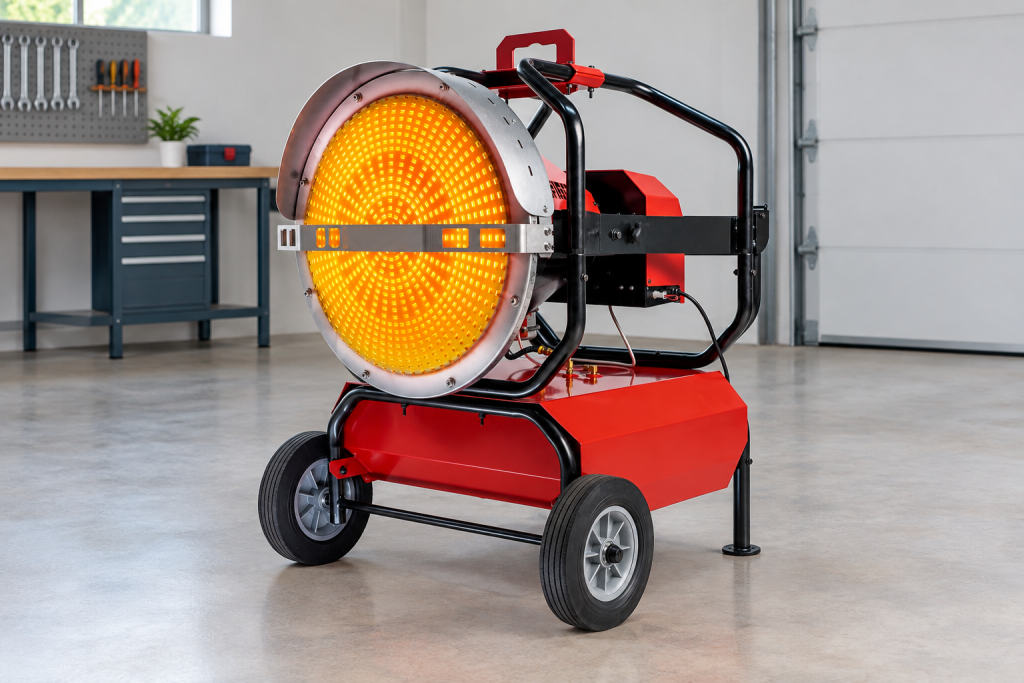
The SUNFIRE SF120 is a fuel-fired radiant heater rated at 120,000 BTUs, and the listing says it heats an area up to 2,800 square feet. It runs on diesel, #2 fuel oil, or kerosene, with a 14 gallon tank that supports about 16 hours of continuous running before refueling.
Several features speak directly to the safety topics above. A tip-over switch turns the heater off if it gets knocked over. A built-in flame sensor watches flame quality and shuts the heater down if the flame goes out or burns poorly, then starts a post-purge cool down. Because it is a radiant unit, the listing notes it is not affected by wind the way forced air heaters are, and it runs more quietly than torpedo-style heaters.
The maker describes the SF120 as burning fuel cleanly with no strong smell or fumes, and it positions the heater for shops, pole barns, garages, warehouses, and jobsites. Even so, any heater that burns fuel still calls for ventilation, a working carbon monoxide alarm, and proper clearance, so follow the manual closely.
The heater is made in Janesville, Wisconsin, and the maker lists a two-year warranty with free phone support from its technical team.
SUNFIRE SF120 Radiant Heater for Shops and Garages
The SUNFIRE SF120 suits open workspaces such as shops, garages, and pole barns, where steady heat and quiet running matter. Its tip-over switch and flame sensor with automatic shutdown add protection, and the large tank supports long run times between refills.

The SUNFIRE SF120 is a dependable pick for heating large workspaces with long run time → View on Amazon
Why Radiant Heaters Start Fires and Cause Burns
Most heater problems trace back to a handful of repeat causes. Here is how each cause leads to a real hazard.
- Cause: Flammable items too close. Effect: Radiant heat travels in a straight line, so paper, bedding, curtains, or furniture in the heat path can warm until they ignite. Fire safety groups advise at least three feet of open space.
- Cause: A soft or unstable surface. Effect: Rugs, carpet, or a wobbly table can tip the unit or trap heat. The CPSC recommends a level, hard, nonflammable surface.
- Cause: Missing or failed tip-over protection. Effect: A knocked-over heater keeps running where it lands. Automatic cut-off devices are now required on electric and kerosene heaters, so an older unit without one deserves extra caution.
- Cause: Wrong fuel in a fuel-fired heater. Effect: Fuel the maker did not list can raise fire risk sharply. NFPA says to always use the fuel specified by the manufacturer.
- Cause: Touching hot guards or grilles. Effect: Contact burns happen quickly, especially for children and pets who cannot judge heat.
- Cause: Running the heater while you sleep or leave. Effect: A small problem grows unseen. The CPSC says never to leave a space heater on when you go to sleep.
- Cause: Extension cords on electric models. Effect: Cords and power strips can overheat under a heater’s load, so plug electric units straight into a wall outlet.
Fix the cause and the effect usually disappears. That is why placement and daily habits matter more than any brand name.
Is Radiant Heater Safe for Your Health and Air?
Air Quality and Dust
Electric radiant heaters warm surfaces and people instead of blowing air around, so they do not stir up dust the way fan-driven heaters can. Fuel-fired units are different. They use room air for combustion and release exhaust, so fresh air and a carbon monoxide alarm are part of the health equation.
Radiation and Eye Comfort
Infrared energy behaves a lot like visible light, but your eyes cannot see it. The Health Physics Society advises against looking at the heater for extended periods. In daily use, this simply means you should not stare into the glowing element, and you should avoid sitting directly in front of it for hours.
Heat Exposure on Skin
Heat itself is the main health risk. Sitting too close can cause dangerous skin burns if the heating is extreme, even when the unit looks harmless. Keep a comfortable distance, and move farther back if your skin feels tight or hot. Anyone who cannot easily move away, such as a small child or a person who does not feel heat well, needs a larger buffer and closer supervision.
Used with sensible distance and the right ventilation, a radiant heater is a reasonable way to heat a room or workspace. The key is to treat it as a hot appliance first and a comfort tool second.
Electric vs Fuel-Fired Radiant Heater Safety Differences
The word radiant describes how a heater delivers warmth, not how it gets its energy, and that difference decides most of the safety picture.
Electric radiant heaters turn power into infrared heat with no flame and no exhaust. Their main risks are burns, fire from nearby combustibles, and electrical problems such as damaged cords or overloaded outlets. Because nothing burns inside the unit, you do not need to worry about carbon monoxide from the heater itself.
Fuel-fired radiant heaters burn kerosene, diesel, propane, or similar fuel. They bring every electric risk plus three more: carbon monoxide, fuel handling, and open flame. The CPSC notes that improper venting or incomplete combustion can cause poisoning and indoor air pollution. NFPA adds that you should always use the fuel the manufacturer specifies. A fuel mix-up, such as gasoline in a kerosene unit, is a classic way to turn a normal heater into a fire.
Think about a home office versus a pole barn. In the office, an electric radiant panel is the sensible match. In the barn, a fuel-fired radiant unit may make sense because the space is large, but only with ventilation, careful refueling, and a working carbon monoxide alarm nearby.
Neither type is automatically better. The safer choice is the one built for your space and used exactly as the manual describes.
Carbon Monoxide Risks and Ventilation for Radiant Heater Safety
Carbon monoxide has no color or smell, so your body is often the first alarm. The Centers for Disease Control and Prevention lists headache, dizziness, weakness, upset stomach, vomiting, chest pain, and confusion as common signs, and many people mistake them for the flu. The pairs below connect what you may feel with what could be going wrong around a fuel-fired radiant heater.
- Symptom: Headache and dizziness after an hour of use. Likely cause: a closed garage or workshop where fresh air is not replacing the air the flame uses.
- Symptom: Nausea in several people at once. Likely cause: a shared space filling with exhaust from poor combustion. When more than one person feels sick in the same room, suspect the air.
- Symptom: Weakness or confusion. Likely cause: higher carbon monoxide from the wrong fuel, a blocked air path, or a unit that needs service.
- Symptom: Drowsiness in a sleeping area. Likely cause: a fuel-fired heater left on overnight. The CDC warns that sleeping people can be harmed before they notice any symptoms.
- Symptom: Chest pain. Likely cause: heavy exposure. Treat this as an emergency.
If you suspect carbon monoxide, turn off the heater if it is safe to do so, get outside to fresh air, and call 911 or seek medical help. If a carbon monoxide alarm sounds, leave right away. The CPSC also suggests placing an alarm outside each separate sleeping area and having gas and kerosene heaters inspected every year.
Is a Radiant or Convection Heater Safer for Your Home?
Both types can be used safely, and neither one is risk-free. The real differences show up in how each one delivers heat.
- How radiant heaters work: They send infrared energy straight to people and objects. The Health Physics Society notes that this energy mostly passes through the air without heating it.
- How convection heaters work: They warm the air, and the warmed air spreads through the room. Many ceramic heaters are fan-forced, so they fall into this group.
- Burn risk: A radiant heater can feel very hot to anything in its direct path. Convection units can also have hot surfaces, so keep children and pets away from both.
- Fire risk: Radiant heat can ignite items sitting in front of the unit, which makes clearance the top rule. Convection heaters can ignite blankets or clothes too, so the same three foot rule applies.
- Air and dust: Fan-driven convection heaters can stir up dust and allergens. Electric radiant heaters do not rely on blowing air.
- Drafty spaces: Radiant heat is not blown away by wind or drafts the way forced air can be. That is why it suits open garages, shops, and barns.
- Closed rooms: Convection heating spreads warmth evenly through a closed room, which can suit a bedroom or office better.
- Fuel-fired versions: Either style can burn fuel, so carbon monoxide rules apply regardless of the heat type.
- Safety features: A tip-over cut-off, overheat protection, and a recognized testing laboratory label matter more than the heating style.
Radiant Heater Safety Around Pets, Kids, and Furniture
Real homes and shops are messy, so these scenarios show how the rules play out.
The dog by the heater. Your dog loves the warm spot and keeps curling up near the front of the unit. Pets cannot judge heat the way you do, and the CPSC advises keeping children and pets away from space heaters. Use a barrier, or move the heater to a spot your dog cannot reach.
The toddler on the move. A small child can touch a hot guard in seconds. NFPA recommends a three foot kid-free zone around space heaters. Place the heater where you can see it, keep it on a stable surface, and never let children play beside it.
The couch pushed close. In a small room, it feels natural to slide the sofa toward the heat. That small shift can put fabric inside the heat path. Move furniture back until you have open space in front of the heater, and keep curtains and throw blankets clear.
The laundry rack. Wet clothes near a radiant heater look like a smart shortcut, but fabric can overheat and ignite. Safety guidance from the CPSC says never to use heaters to dry clothes or shoes.
The busy walkway. In a shop or hallway, people trip over cords and bump into units. Keep heaters out of foot traffic, and never place one where it blocks an exit.
Where a Radiant Heater Is Safe in Garages and Basements
Garage
A garage is a common spot for radiant heat, but it hides two hazards: stored fuel and poor airflow. Keep gas cans, paint, solvents, and aerosol cans well away from any heater with a flame. Never run a vehicle inside a closed or attached garage, since that adds carbon monoxide to the air. For fuel-fired heaters, follow the manual for ventilation instead of sealing the room tight.
Basement
Basements tend to have limited airflow, which lets exhaust and dust collect. An electric radiant heater is usually the easier match here. If you use a fuel-fired unit, make sure the manual approves indoor use, provide fresh air, and install a carbon monoxide alarm. Keep it away from stored boxes, laundry, and anything that can burn.
Bathroom
Water and electricity do not mix, and bathrooms are small, damp, and often closed. Fuel-fired heaters do not belong in a small closed room. For electric models, use only a unit the maker clearly approves for damp spaces.
If your manual and local rules do not approve a location, treat that spot as off limits.
Safe Clearance Distances for Your Radiant Heater
Use this checklist each time you place or move a heater.
- Keep anything that can burn at least three feet from the heater, including furniture, bedding, curtains, paper, and clothing.
- Maintain a three foot kid and pet free zone around the unit.
- Set the heater on a level, hard, nonflammable surface, never on carpet or a rug.
- Keep it out of walkways, doorways, and exit paths.
- Store gas cans, paint, solvents, and aerosol cans far from the heater.
- Do not hang or lay clothes, towels, or blankets on or near it.
- Keep the area behind and beside the unit clear of dust buildup and clutter.
- Check the manual for the maker’s distance for your model, and if it lists a larger number, follow the larger number.
- Recheck the clearance whenever you move furniture, add storage, or rearrange the room.
Treat this list as a starting point, because the manual always wins when it gives model-specific limits.
Safe Startup and Refueling Steps for a Radiant Heater
These steps fit fuel-fired models. Electric units follow steps 1 to 3, then simply plug in directly to a wall outlet.
- Read the manual. Confirm approved rooms, fuels, and clearance for your model.
- Pick the spot. Choose a level, nonflammable surface with open space on all sides and good airflow.
- Inspect the unit. Look for damaged guards, loose parts, leaks, or worn cords before every season and after any move.
- Check the fuel. Use only the fuel the manufacturer lists. Never substitute gasoline or an unlisted fuel.
- Test your alarms. Confirm that your smoke alarm and carbon monoxide alarm work before you start.
- Start as instructed. Follow the exact startup sequence in the manual and keep people and pets back.
- Watch the first minutes. Listen for odd sounds and notice any strange smell or smoke. Shut the heater off if something seems wrong.
- Cool down before refueling. Turn the unit off, let it cool completely, and refuel outdoors or as the manual directs, wiping up any spills first.
Never leave the heater running when you sleep or leave the space.
Common Radiant Heater Safety Mistakes to Avoid
- Treating all radiant heaters the same. An electric panel and a fuel-fired unit need very different ventilation and handling.
- Sealing the room tight. Closing every door and vent in a space with a fuel-fired heater lets carbon monoxide build up.
- Sleeping with the heater on. Fire safety groups and the CPSC advise turning portable heaters off when you leave the room or go to bed.
- Using extension cords. Plug electric heaters directly into a wall outlet.
- Putting the heater on carpet. Soft surfaces can tip the unit or trap heat.
- Drying laundry on or near the unit. Fabric can overheat and ignite.
- Using the wrong fuel. Even a small amount of gasoline in a kerosene heater can cause a fire.
- Ignoring odd smells or soot. These can signal poor combustion or a dirty unit that needs service.
- Skipping annual inspection. The CPSC recommends yearly inspection for gas and kerosene heaters.
- Relying on old units. Older heaters may lack newer protections such as tip-over cut-off.
Radiant Heater Maintenance Habits That Keep Winter Use Safe
Prevention works best when it follows the seasons.
Before the first cold snap. Read the manual again and inspect the guard, cord, and fuel connections. Fire safety groups advise having heating equipment cleaned and inspected every year by a qualified professional. Test your smoke alarm and carbon monoxide alarm, and replace batteries as needed.
During daily use. Do a quick walk-around before you start. Confirm that nothing sits in front of the unit, that children and pets are clear, and that fresh air is available if you run a fuel-fired model. Turn the heater off when you leave. Keep dust and cobwebs off the unit, since buildup can burn and create odors.
After the season ends. Let the heater cool fully, clean it as the manual allows, and store it somewhere dry. Keep fuel in a proper container, away from the living space and away from the heater.
These small habits take only a few minutes, yet they cover the main causes of heater fires, burns, and carbon monoxide trouble.
FAQs
Can a Radiant Heater Cause Cancer?
The Health Physics Society’s expert answer describes infrared heaters as safe for people and notes that infrared radiation is very different from the radiation produced by x-ray machines. The practical risks are not hidden radiation effects. They are burns from getting too close and fires from nearby items that overheat. Fuel-fired models add carbon monoxide if ventilation is poor. If you want to stay on the safe side, keep a sensible distance, avoid staring at the glowing element, read the manual for your exact model, and treat heat and fuel handling as the real concerns.
Is It Safe to Leave a Radiant Heater On Overnight?
No. The CPSC says never to leave a space heater on when you go to sleep, and NFPA advises turning portable heaters off when you leave the room or go to bed. Overnight use removes your ability to notice a problem such as a tipped unit, a smell, or heat reaching bedding. Fuel-fired models add the danger of carbon monoxide, which can harm a sleeping person before any symptoms appear. If you need steady nighttime warmth, look at whole-room heating or a unit made and approved for continuous, unattended operation.
Do Radiant Heaters Need Ventilation?
It depends on the type. An electric radiant heater burns nothing, so it needs no ventilation for combustion, though you should still avoid sealed, damp, or cluttered spaces. A fuel-fired radiant heater uses room air to burn fuel and releases exhaust, so the CPSC advises following the manufacturer’s instructions to provide enough combustion air. A cracked window or open door is not a substitute for the manual. Pair any fuel-fired unit with a working carbon monoxide alarm, and treat headaches or dizziness during use as a sign to shut it off and get outside.
Can I Use a Radiant Heater in a Mobile Home?
Be careful here. The CPSC notes that mobile homes require specially designed heating equipment. Small rooms, tight construction, and limited airflow raise the stakes for both fire and carbon monoxide. Before you bring any radiant heater into a mobile home, check that the manual approves that setting and confirm your local rules. Many fuel-fired units are made for open workspaces rather than living areas. When in doubt, ask the maker or a qualified heating professional.
How Do I Know My Radiant Heater Needs Service?
Watch for warning signs rather than waiting for a failure. Strange smells, soot, smoke, rattling sounds, a damaged guard, a cord that feels hot, or a tip-over switch that no longer works all call for shutting the unit off. Headaches, dizziness, or a carbon monoxide alarm during use are more urgent signs. The CPSC also recommends yearly inspection for gas and kerosene heaters, and notes that older heaters may lack newer safety features. If you are unsure, stop using the heater until a qualified person checks it.
Is a Radiant Heater Safe in a Bedroom, Living Room, or Kitchen?
An electric radiant heater can work in a bedroom or living room while you are awake and present, as long as it has clear space on all sides. In a bedroom, the rule is simple: turn it off before you sleep, and never place it close to a sleeping person, as the CPSC advises. Skip fuel-fired radiant heaters in these rooms unless the manual specifically approves them. In a kitchen, grease, cooking heat, and clutter raise the fire risk, so keep the heater far from the stove, towels, and paper products.
Is a Radiant Heater Safe for Babies and During Pregnancy?
Babies cannot move away from heat, so a radiant heater needs extra distance around them. The CPSC advises keeping children away from space heaters, and NFPA recommends a three foot kid-free zone. Never place a heater near a crib, play area, or anywhere a baby sleeps. The Health Physics Society describes infrared heaters as safe for people in general, but pregnancy is a personal medical matter. If you have specific health concerns during pregnancy, check with your doctor, and keep to the same distance, supervision, and ventilation rules.
Is a Radiant Heater Safe for Large Rooms and Open Spaces?
Radiant heat can work well in large or drafty spaces because it warms people and objects directly instead of relying on moving air. The safety rules stay the same, though. Heater output must match the space, and a larger space does not mean you can ignore clearance or ventilation. Fuel-fired models used in big workspaces still need fresh air and a carbon monoxide alarm. For example, the SUNFIRE SF120 listing states coverage of up to 2,800 square feet, but you should always follow the manual for placement and approved areas.
Is a Radiant Heater Safe in Barns and Chicken Coops?
Barns and coops hold straw, hay, wood shavings, and dust, and all of them ignite easily. That makes clearance and secure placement the top priorities. Keep the heater on a stable, nonflammable surface where animals cannot knock it over or touch it, and keep bedding well away from the heat path. Fuel-fired units need ventilation because exhaust can build up in enclosed buildings. Birds and other animals can be sensitive to air quality, so ask a veterinarian if you are unsure about heating around your animals.
Which Radiant Heater Is Safest to Choose?
The safest radiant heater is one that matches your space and includes protective features. The CPSC advises choosing a heater tested to the latest safety standards and certified by a nationally recognized testing laboratory. Look for an automatic tip-over cut-off, a guard around the flame or heating element, and a stable base. For fuel-fired models, flame monitoring and automatic shutdown add another layer of protection. Even the safest unit needs clearance, ventilation, and supervision, so choose by features, not by claims, and read the manual before first use.
Final Thoughts on Staying Safe With Radiant Heat
A radiant heater is a safe, effective way to warm people and spaces when you match the heater type to the room. Electric models mainly call for distance, stable placement, and direct wall power. Fuel-fired models add the need for the right fuel, careful refueling, fresh air, and a working carbon monoxide alarm. Most problems come from preventable habits, such as placing furniture too close, sleeping with the heater running, or sealing a garage tight.
For a large workspace, a model with a tip-over switch and flame sensor, like the SUNFIRE SF120, supports safer operation, but features never replace good setup. Keep clearance, follow the manual, and inspect your heater every season.