Disclosure: As an Amazon Associate, I earn from qualifying purchases. Learn more
Last Updated on November 6, 2026 by Mark Jase
For most backyard greenhouses up to about 150 square feet, the Dr. Infrared DR218 and the BioGreen Palma give the steadiest frost protection, while the light VEVOR PTC heater suits sheltered grow tents. Frost works quietly, one clear night at a time, and a good heater refuses to let it settle in.
The hard part is that almost every listing promises the same 1500 watts, so the real choice comes down to details that are easy to miss. You need a heater whose coverage area matches your space, a thermostat that switches on before your plants feel the cold, and moisture protection that can live with daily watering. Pick wrong and you either waste power or wake up to wilted seedlings. The reviews and guides below show how each heater handles those three points, who should skip it, and how to size and place any small greenhouse heater safely.
The DR218 brings splash-rated infrared warmth for sheltered greenhouses, while the VEVOR PTC heater adds light, fast heat and a fan mode for grow tents.
For Steady Infrared Warmth
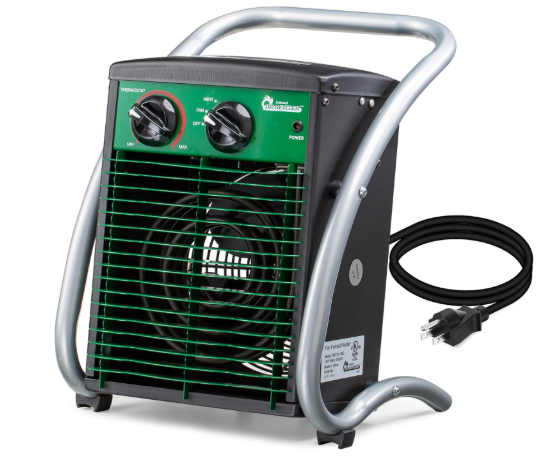
Dr. Infrared Heater DR218
- IPX4 splash protection
- Heats about 150 sq ft
- Heavy-duty steel housing
For Compact Grow Tents
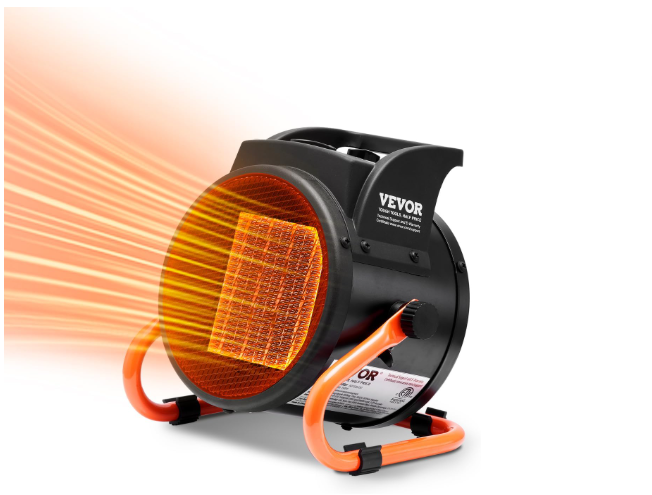
VEVOR PTC Greenhouse Heater
- Heat and fan modes
- Weighs under five pounds
- 25 degree tilt base
Small Greenhouse Heater Reviews for Winter Plant Protection
1. Dr. Infrared Heater DR218 for Steady Greenhouse Warmth
This 1500-watt infrared heater is built for greenhouses, garages, and workshops, with a heavy-duty steel housing and an IPX4 structure that resists water splashes. The listing gives a heating coverage of about 150 square feet.
Its fan motor is totally enclosed, thermally protected, and lubricated for life, so upkeep stays low. A precision temperature sensor works with built-in overheat protection and a thermostat control, though the listing also notes a single 1500-watt setting.
In-Use Impressions: Shoppers often mention solid build quality and good results in small greenhouses, while opinions on heat output and long-term durability are mixed, and some wish the thermostat knob showed exact temperatures.
Feature Spotlight:
- Enclosed, thermally protected ball-bearing fan motor
- Splash-resistant IPX4 steel cabinet
Practical Gains:
- Handles damp greenhouse air better than open designs
- Light enough to move between spaces
- Little routine maintenance needed
Fits Best With:
- Small sheltered greenhouses
- Garages and workshops
- Plant rooms with splash risk
Limits To Keep In Mind: One heat setting limits fine control, and the 150 square foot figure assumes a sheltered space. Colder regions may need a second heater.
2. VEVOR PTC Greenhouse Heater for Fast Compact Heat
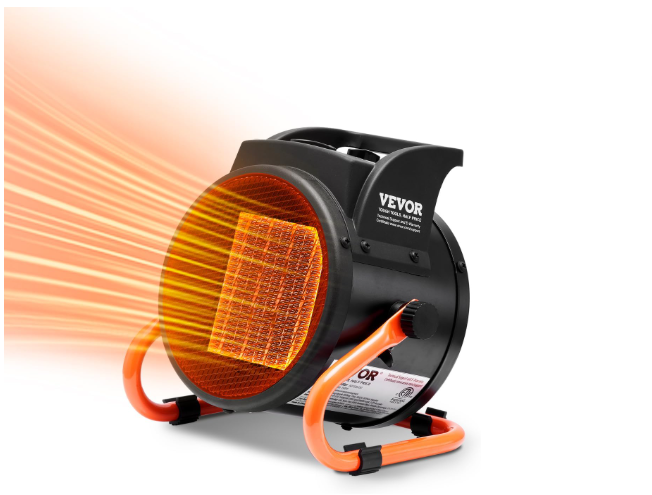
The VEVOR heater uses a 1500-watt PTC ceramic element rated at about 5,100 BTU, with a three-level temperature knob and a fan-only mode for ventilation and drying in warmer months.
It weighs under five pounds, has a carry handle and an anti-slip base, and tilts to a 25 degree angle to aim the airflow. It is ETL certified with overheat protection, and the outlet grille is shielded.
This version has no plug-in thermostat; the listing offers a heater and thermostat bundle as a separate option.
In-Use Impressions: Shoppers report mixed results on heat output, with some happy in small enclosed spaces and others finding it weak, and value opinions are divided too.
Feature Spotlight:
- Fan mode for summer air movement
- Adjustable 25 degree airflow angle
Practical Gains:
- Very easy to carry and reposition
- Quick warm air from a cold start
- Doubles as a circulation fan
Fits Best With:
- Grow tents and plant tents
- Small sunrooms
- Covered workspaces
Limits To Keep In Mind: The IP20 rating means no water protection, so keep it far from hoses and misters. Add a separate thermostat for unattended frost control.
3. BioGreen Palma Greenhouse Heater With Precise Thermostat Control
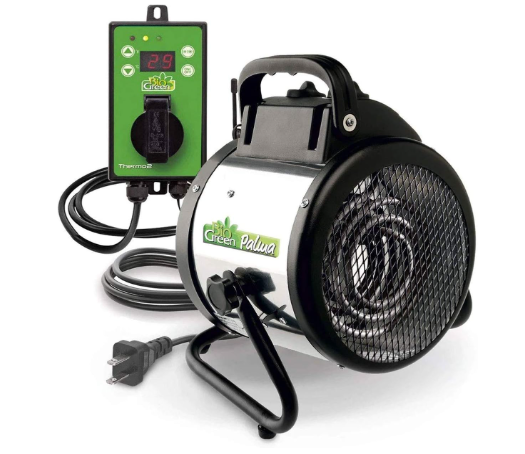
The BioGreen Palma is designed specifically for greenhouses, with two adjustable heating levels of 750 or 1500 watts and a digital thermostat that starts and stops the heater on its own within a 32°F to 185°F range.
Its fan moves up to about 5,800 cubic feet of air per hour, and a separate air circulation mode keeps warm air from pooling around plants. The stainless steel housing is splash-proof to IPX4, and the listing rates it for rooms up to 120 square feet.
In-Use Impressions: Buyers often praise easy setup, steady temperature control, and healthy plants, while some say heat output falls short in colder spells and others report units failing within a season.
Feature Spotlight:
- Low-power 750 watt setting for mild nights
- Thermostat with a narrow switching range
Practical Gains:
- Avoids wasting heat on mild nights
- Moves warm air into corners
- Starts heating automatically before frost
Fits Best With:
- Backyard greenhouses up to 120 sq ft
- Cold frames and winter tents
- Sunrooms with tender plants
Limits To Keep In Mind: Coverage tops out around 120 square feet. Some owners report early failures, so keep a backup heater ready for hard freezes.
4. Buyplus Greenhouse Heater With Digital Probe Thermostat
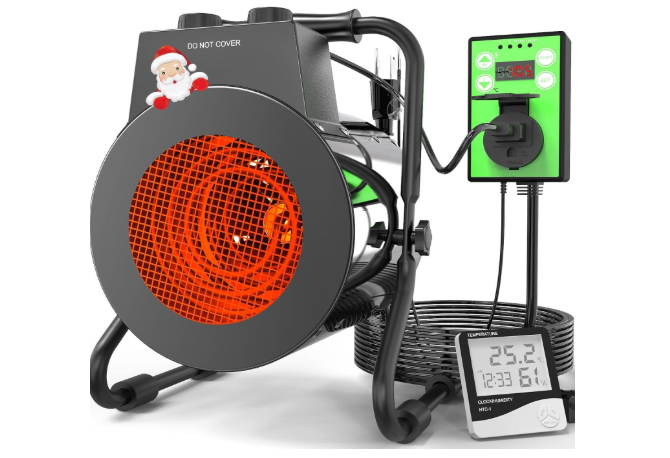
This Buyplus heater pairs 1500 watts of PTC heat with a digital thermostat that reads the air through a waterproof temperature probe, adjustable from 40°F to 108°F. The listing rates it for spaces up to 215 square feet.
A self-resetting heat breaker cuts power if the inside gets too hot, and a 25-watt fan-only mode covers warmer seasons. A 7.5-foot cord, a 0 to 45 degree tilt, a handle, and a non-slip base make placement easier.
In-Use Impressions: On paper, the probe thermostat is the standout, because it measures the air where you place the sensor rather than at the heater itself.
Feature Spotlight:
- Waterproof thermostat probe
- Self-resetting heat breaker
Practical Gains:
- Temperature readings closer to plant level
- Wide tilt for aiming warm air
- Longer cord gives more placement choices
Fits Best With:
- Small greenhouses and grow tents
- Covered patios
- Garages and flower rooms
Limits To Keep In Mind: The 40°F minimum setting will not hold air just above freezing. The 215 square foot claim is ambitious for a single 1500-watt unit.
5. LHUKSGF Greenhouse Heater With Three Output Levels
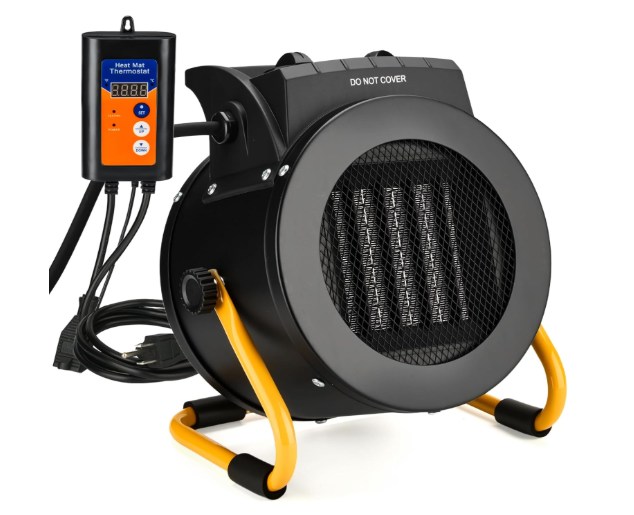
The LHUKSGF heater uses PTC ceramic heating with three output levels of 20, 750, and 1500 watts, and its thermostat controls temperatures from 40°F to 108°F.
The housing carries an IPX4 rating with an anti-corrosion exterior, and you can set it on its anti-slip ground base or hang it from the built-in hook to keep benches and paths clear.
In-Use Impressions: Shoppers like how it performs in winter greenhouses, though reliability feedback is mixed, with some units stopping after several months, and a few find the heat weaker than expected.
Feature Spotlight:
- Hanging hook plus ground base
- Low 20 watt output level
Practical Gains:
- Frees floor space in tight greenhouses
- Handles splashes from routine watering
- Matches output to mild or cold nights
Fits Best With:
- Small hobby greenhouses
- Covered patios
- Grow tents with overhead bars
Limits To Keep In Mind: Like most 1500-watt units it is a supplemental heater. Watch it closely through its first winter and keep a backup on hand.
How to Size a Heater for a Small Greenhouse
The heater size you need depends on three things: the outside surface area of the greenhouse, how well the covering holds heat, and the lowest night temperature your plants must survive. Floor area alone hides the real loss, because heat escapes through the roof, side walls, and end walls.
An extension guide on sizing a greenhouse heater builds the estimate from surface area, covering type, and the night temperature your crop needs, then adds about 10 percent for winter ventilation and another 10 percent for a windy site. It also says the heater output should equal or exceed that heat loss.
To compare electric heaters, convert watts to heat output: one watt equals about 3.41 BTU per hour, so a 1500-watt heater delivers roughly 5,100 BTU per hour at full power. That number is fixed, so a bigger or leakier greenhouse needs more heating capacity, not a different brand.
Going by the listed specifications, the coverage figures for the heaters above run from about 120 to 215 square feet, which fits many backyard kits but not larger walk-in houses. Treat those figures as best-case numbers for sealed, sheltered spaces.
What to Check Before Buying a Greenhouse Heater
Coverage That Matches Your Space
Compare the listed coverage with your floor area and leave a margin. A greenhouse with thin film, gaps, or a windy site needs more heat than the label suggests.
Thermostat Type and Range
A thermostat keeps the heater from running nonstop. Check the lowest setting: some units start at 32°F, while others start at 40°F, which matters if you only want frost protection. A remote probe reads the air where your plants sit.
Moisture Rating
The second digit of an IP rating covers water. IPX4 means protection against splashing from any direction, while a rating such as IP20 offers no water protection at all.
Built-In Safety Features
Look for overheat protection, a stable non-slip base, and a label showing the heater is listed by a recognized testing laboratory.
Weight and Mounting
A carry handle, an adjustable tilt, or a hanging hook decides how easily you can place the heater in a crowded space.
PTC Versus Infrared Heaters for Small Greenhouse Plants
Most compact greenhouse heaters are 1500-watt electric fan units, and the main difference is the heating element. PTC ceramic elements warm up quickly and naturally limit their own surface temperature, which is why so many small portable units use them.
Infrared-style units send radiant heat to the surfaces and leaves they face, and most greenhouse versions add a fan to spread warm air. If you want to compare more infrared heater options, the same sizing math still applies.
Neither type produces more heat per watt. Every 1500-watt resistance heater turns electricity into about the same heat output, so the real differences are airflow, durability, controls, and moisture rating.
Air movement matters more than most people expect. Warm air rises into the roof peak, so a fan that mixes it back down keeps benches and corners closer to your set temperature.
| Heater style | Good fit |
|---|---|
| PTC ceramic fan | Light, quick heat for tents and kits |
| Infrared with fan | Steady heat in sheltered structures |
| Fan-only mode | Summer airflow and drying |
Where to Place a Heater Inside Your Greenhouse
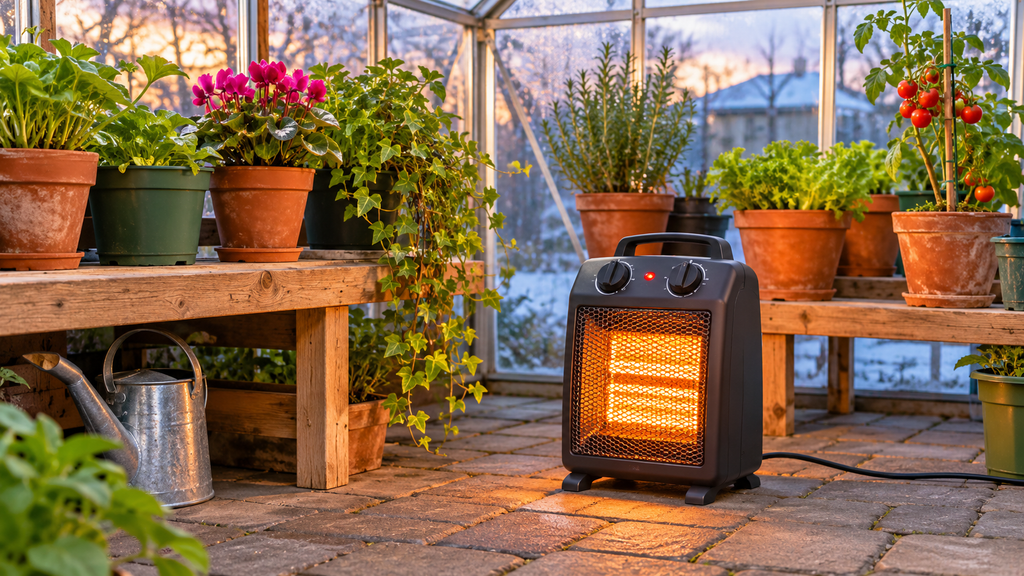
Set the heater low and near the center or the coldest end, on a stable, level surface such as a paver. A paver also keeps the base clear of puddles after watering.
Aim the airflow along the path or under benches rather than straight at foliage. Hot, dry air blown onto leaves at close range can stress tender plants.
Hang the thermostat probe or a separate thermometer at plant height in the middle of the greenhouse, out of direct sun and away from the heater outlet. A sensor near the heater reads warm and switches off too early.
Keep at least three feet of clear space around the heater, away from plastic film, seed trays, and stored supplies, as general space heater fire guidance advises.
Good circulation spreads the heat you pay for. On sunny days, a small solar-powered greenhouse fan can keep air moving and cut humidity without adding to the heater circuit.
Electrical Safety Rules for Heaters in Damp Greenhouses
A 1500-watt heater draws about 12.5 amps on a standard 120-volt circuit, which leaves little room on a typical 15-amp circuit for anything else. Run grow lights or pumps on a different circuit when you can.
Plug the heater directly into a wall outlet, never into an extension cord or power strip, as federal fire safety guidance advises. If your greenhouse has no outlet, have a qualified electrician add an outdoor-rated one instead of running a long cord.
Inspect the cord and plug for cracks, fraying, or bent prongs before each season. If the plug or outlet feels hot while the heater runs, unplug it and have the outlet checked.
Match the moisture rating to how you water. An IPX4 heater handles splashes, but no electric heater belongs in the path of a hose or mister. For more on heat and safety basics, see this guide to radiant heater safety.
Fuel-burning heaters add combustion gases to an enclosed space. If you use propane or kerosene, follow the maker’s venting rules exactly and add a carbon monoxide alarm.
Benefits of Steady Heat for Small Greenhouse Plants
The biggest benefit is frost protection. A heater with a thermostat switches on before the air near your plants drops below freezing, which is when tender leaves and roots take damage.
Steady heat also extends the growing season. You can start seeds earlier in spring and keep crops going later into fall, or overwinter potted citrus and tropical plants instead of hauling them indoors.
Consistent warmth supports germination and steady growth, because seedlings do not have to recover from a cold night every few days.
Care and Upkeep That Keeps a Greenhouse Heater Working
- Unplug and cool first: never clean or move a heater while it is hot or plugged in.
- Clear the grilles: brush dust, soil, and plant debris off the intake and outlet, since blocked vents can trip the overheat cutout.
- Check the cord each season: replace a heater with a damaged cord or plug rather than taping it.
- Test the thermostat: compare its reading with a separate thermometer before the first cold night.
- Store it dry: keep the heater in a dry shed or garage through summer, with the cord loosely coiled.
- Follow the manual: use the clearances, placement, and limits the maker lists for your model.
Common Mistakes That Leave Small Greenhouse Plants Cold
- Relying on one heater: if it fails on the coldest night, everything inside is exposed. Extension guidance favors two smaller heaters over one large unit so one can back up the other.
- Sizing by floor area only: heat leaves through every wall and roof panel, so tall or leaky houses lose far more than the floor suggests.
- Putting the sensor in the wrong spot: a probe near the heater or in direct sun shuts the heat off too soon.
- Forgetting sunny-day heat: a thermostat stops heating but does not cool, so open vents or run a fan on bright winter days.
- Skipping simple insulation: sealing gaps and adding a bubble insulation layer reduces how hard the heater must work.
- Blasting plants directly: aim warm air into open space so it mixes before reaching leaves.
Quick Rule of Thumb for Choosing Your Heater
If your greenhouse is under about 120 square feet, well sealed, and only faces light frost, one 1500-watt heater with a real thermostat is usually enough.
For a grow tent or tiny shelter, a light PTC unit with a separate plug-in thermostat gives quick heat without crowding the space.
If your space is larger than about 150 square feet or sees hard freezes, plan for two heaters or more total capacity, and add insulation before adding watts.
Greenhouse Heater Questions Gardeners Ask Most
Can a 1500-Watt Heater Keep a Greenhouse Above Freezing?
It can in a small, well-sealed greenhouse during moderate cold, but it has a hard limit. A 1500-watt heater produces about 5,100 BTU per hour, and once the heat loss of your structure is higher than that, the inside temperature keeps falling.
Single-layer film and glass lose heat faster than double layers or twin-wall panels. In very cold climates, insulation, a second heater, or a stronger heating source becomes necessary.
Is an Electric or Propane Heater Better for a Small Greenhouse?
Electric heaters are simpler for small hobby greenhouses because they burn no fuel and add no combustion gases or moisture to the air. They need a safe nearby outlet, though.
Propane heaters work without electricity and can produce more heat, but they release combustion gases and water vapor. They need ventilation, a carbon monoxide alarm, and models rated for the space, which makes them better suited to larger or off-grid structures.
Can Solar Power Run a Greenhouse Heater?
A small solar setup rarely runs a 1500-watt heater for long. Running that heater for eight hours at full power uses about 12 kilowatt-hours, far more than a basic panel and battery kit stores.
Solar power works better for fans, vent openers, and lights, while daytime sun and thermal mass do the passive heating. For the details, read about running a heater on solar before buying equipment.
What Temperature Should a Small Greenhouse Stay at Night?
That depends on what you grow. Frost protection only needs the air at plant level to stay above 32°F, but most gardeners set the thermostat a few degrees higher because corners and floors run colder than the sensor.
Warm-season vegetables and tropical plants need much higher night temperatures. Check what your plants need and set the heater for the most sensitive one.
Is It Safe to Run a Greenhouse Heater Overnight?
General fire safety guidance warns against leaving space heaters unattended, yet greenhouse heaters often run overnight under thermostat control. If you do this, follow the manual exactly and keep the clearances clear.
Use a model with overheat protection, plug it straight into a wall outlet, and check it regularly. A wireless thermometer with a low-temperature alarm warns you if the heater stops working on a cold night.
Picking the Right Warmth for Your Small Greenhouse
The DR218 suits gardeners who want a tough, splash-resistant heater for a sheltered space, the BioGreen Palma fits those who need precise thermostat control in a greenhouse up to about 120 square feet, and the VEVOR PTC heater works for light grow tent duty away from water. Every 1500-watt heater has the same heat ceiling, so no single unit can rescue a large, leaky greenhouse in a hard freeze. Size from your surface area and coldest night first, then choose the heater, and keep a backup if losing your plants would hurt.