Disclosure: As an Amazon Associate, I earn from qualifying purchases. Learn more
Last Updated on November 13, 2026 by Mark Jase
Some warmth arrives in a rush, and some settles in like a slow sunrise. For most homes, the De’Longhi ComfortTemp Radiator Heater is the best oil filled radiator heater to start with, and the DREO Oil Filled Radiator Heater is the pick if you want a remote and timer.
Maybe your bedroom runs cold at night, or your home office never quite warms up. You want heat that is quiet and fan-free, safe to leave running while you are in the room, and efficient enough to use daily without a big jump in your power bill.
This guide compares six oil filled radiators, explains how far 1500 watts really goes, and covers the placement and care habits that keep these heaters working well for years.
Fan-free warmth with ComfortTemp sets the De’Longhi ComfortTemp Radiator Heater apart, while the DREO Oil Filled Radiator Heater adds a remote, touchscreen, and 24-hour timer.
For Gentle Steady Heat
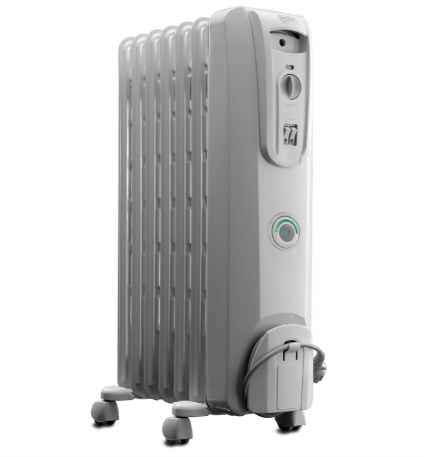
De’Longhi ComfortTemp Radiator Heater
- ComfortTemp energy feature
- Thermal slot design
- Anti-freeze setting
For Remote Control Comfort

DREO Oil Filled Radiator Heater
- 24-hour timer
- Child lock and mute
- 600W to 1500W modes
How We Chose These Oil Filled Radiator Heaters
We focused on oil filled radiators from recognized brands with clear, verifiable listings. Each one had to offer sealed, maintenance-free oil, at least overheat protection, and easy mobility with wheels or casters.
We then compared control styles, from simple knobs and an adjustable thermostat to digital panels, remotes, and timers. Safety features such as tip-over protection, thermal cut-off, and child lock counted in a model’s favor.
Finally, we kept a mix of control styles and budgets, so you can match a heater to how you actually like to use it.
Reviews of the Best Oil Filled Radiator Heaters
1. De’Longhi ComfortTemp Radiator Heater for Steady Whole Room Warmth
If you are shopping for a De’Longhi oil filled radiator heater, this classic model is the natural place to start. The ComfortTemp feature keeps temperature and power at an efficient level automatically.
An exclusive thermal slot design pushes heat into the room while keeping the surface temperature low. Safety comes from a thermal cut-off and fully enclosed elements, and an anti-freeze setting switches on below 41 degrees. The sealed oil never needs refilling.
Practical Impressions: It suits people who want simple controls and steady, quiet heat without fiddling with settings.
Feature Spotlight:
- ComfortTemp energy-saving mode
- Thermal slot design for lower surface heat
- Smart snap wheels, no installation
Everyday Benefits:
- Fan-free heat with less stirred-up dust
- Easy to roll between rooms
- Low maintenance steel build
Pairs Nicely With:
- Small to medium bedrooms
- Home offices and dens
- Rooms with a dedicated wall outlet
Worth Checking: Controls are simple knobs, with no remote or timer. Like any oil radiator, it takes time to reach full warmth.
2. DREO Oil Filled Radiator Heater With Remote and Timer
Control is where this heater shines. A large LED display, touchscreen, and remote make adjustments easy, and a 24-hour timer can have the room warm before you walk in.
Three power levels plus eco mode help match heat to the weather. The listing pitches it for large rooms, which makes it a fair choice among oil filled radiators for large rooms when used as supplemental heat. Safety includes triple overheat protection, tilt protection, and a child lock.
Practical Impressions: It fits households that like to set a temperature and schedule once, then let the heater handle the rest.
Feature Spotlight:
- Child lock, mute, and screen-off modes
- Seven fins for even heat spread
Everyday Benefits:
- Pre-heat the room with the timer
- Eco mode trims wasted power
- Large wheels for easy moving
Pairs Nicely With:
- Living rooms and family spaces
- Bedrooms with screen-off night use
- Homes with kids, using child lock
Worth Checking: A 1500W ceiling still limits how much space any single radiator can heat. In very large rooms, expect supplemental warmth, not whole-room heat.
3. De’Longhi Dragon Digital Radiator for Programmable Daily Heat
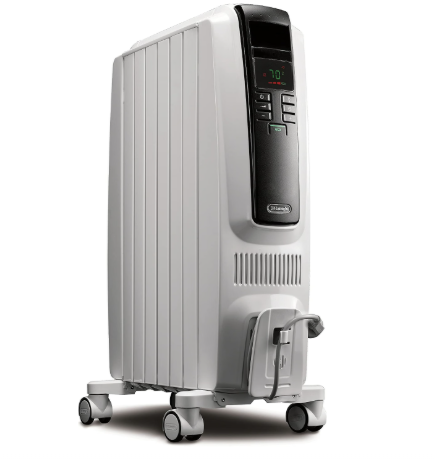
For a set routine, this model is built around scheduling. A digital LED control panel and 24-hour timer let you plan when the heat runs.
De’Longhi says its design offers more radiant surface area than its RadiaS model, for faster heat transfer. ECO Plus regulates power and temperature, while a thermal cut-off, child lock, and anti-freeze setting add protection. Rubber-coated snap wheels and two handles help with moving it.
Practical Impressions: It suits people who want De’Longhi build quality with digital, hands-off scheduling.
Feature Spotlight:
- Digital panel with every function shown
- ECO Plus power regulation
Everyday Benefits:
- Programmable heat for daily routines
- Child lock for family homes
- Sealed oil needs no refilling
Pairs Nicely With:
- Bedrooms on a morning schedule
- Home offices with set work hours
- Small to medium living spaces
Worth Checking: It is sized for small to medium spaces. Heavier radiators like this need a clear path to roll safely between rooms.
4. Amazon Basics Oil Space Heater With Simple Manual Controls
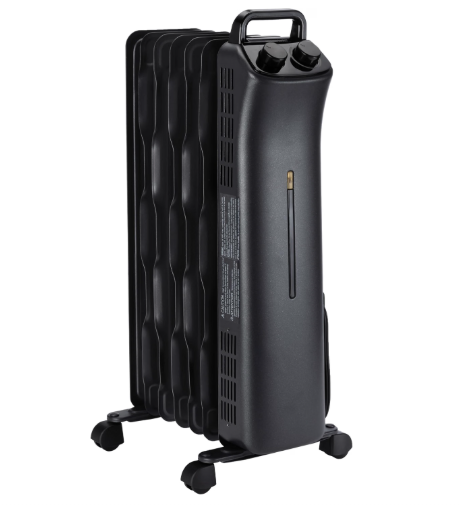
Simple and dependable describes this one. You get an adjustable thermostat and three settings of 600W, 900W, and 1500W, which makes it a solid oil filled radiator heater with thermostat control at an entry level.
Seven wavy oil-filled fins spread warmth evenly, and the sealed oil needs no maintenance. It is ETL listed with enclosed elements, tip-over and overheat protection, caster wheels, and a handle.
Practical Impressions: It fits renters and first-time buyers who want quiet heat without learning a control panel.
Feature Spotlight:
- Tip-over and overheat protection
- Seven wavy fins
Everyday Benefits:
- Thermostat holds a comfortable setting
- Fan-free and silent operation
- Easy to move on casters
Pairs Nicely With:
- Bedrooms and home offices
- Dorm-style or rental rooms
- Backup heat in cold snaps
Worth Checking: Manual knobs mean no timer or remote. You will need to switch it off yourself when you leave the room.
5. DREO M-Fin Radiator Heater With Precise Eco Thermostat
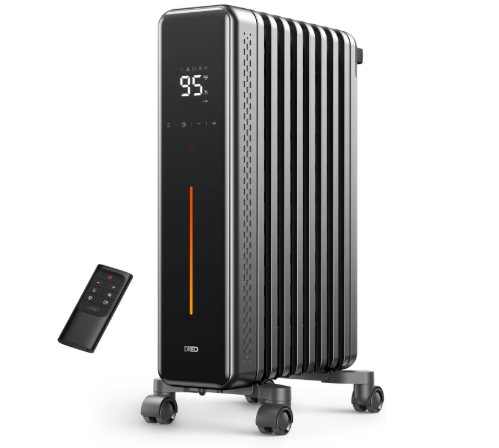
Precision is the theme of this DREO radiator heater. You can set temperatures from 41 to 95 degrees in 1-degree steps, and a dedicated thermal sensor helps it hold close to your setting.
Eight M-shaped fins give a larger heat dissipation area while keeping the surface at a safer temperature. It runs at 600W, 900W, or 1500W plus eco mode, with tip-over protection, triple overheat protection, and ETL certification.
Practical Impressions: It suits people who notice small temperature swings and want tight, steady control.
Feature Spotlight:
- Fine 1-degree temperature control
- Ambient temperature indicator
Everyday Benefits:
- Holds a precise comfort level
- Eco mode adjusts to room temperature
- Lower surface temperature by design
Pairs Nicely With:
- Home offices and studies
- Bedrooms for light sleepers
- Living rooms as supplemental heat
Worth Checking: It sits alongside the other DREO pick here. Choose this one for finer temperature control, the other for timer and remote convenience.
6. Sweetcrispy Oil Filled Radiator Heater for Quiet Bedrooms
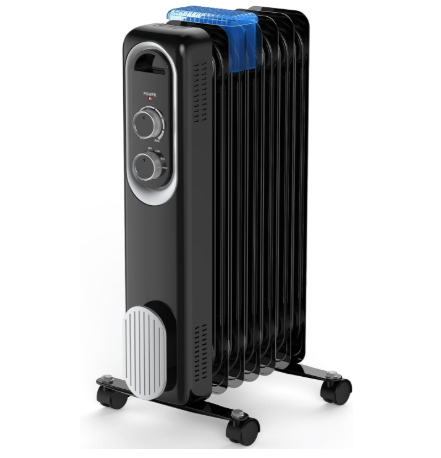
Silence is the selling point here. It runs without a fan, so it suits nurseries, bedrooms, libraries, and home offices where noise is distracting.
Three power modes of 600W, 900W, and 1500W let you save energy on milder days. A tip-over safety switch and overheat protection add peace of mind, and four heavy-duty casters with a handle make moving it easy. The maker lists warming for spaces of about 10 to 15 square meters.
Practical Impressions: It suits small rooms where quiet matters more than advanced controls.
Feature Spotlight:
- Tip-over safety switch
- Power indicator light
Everyday Benefits:
- Silent heat for sleep and focus
- Lower settings cut energy use
- Rolls easily on four casters
Pairs Nicely With:
- Nurseries and small bedrooms
- Home offices and reading rooms
- A grounded wall outlet
Worth Checking: The listing does not mention an adjustable thermostat, so heat control is by power setting. Plug it straight into a grounded wall outlet.
Benefits of Heating a Room With Oil Radiators
Oil filled radiators heat a sealed reservoir of oil, which warms the metal fins. Those fins release heat into the room through radiation and natural convection, with no fan blowing air around.
That design brings real advantages. They run almost silently, they do not stir up dust the way fan heaters do, and the warmth feels gentle rather than blasting.
They also hold heat well. Once the oil is hot, the fins keep releasing warmth even as the thermostat cycles off, which helps keep the room temperature steady.
What Wattage and Room Size Really Mean
Almost every plug-in oil filled radiator tops out at 1500 watts, the practical limit for a standard household outlet. That means no portable radiator heats a large open area on its own, whatever the box suggests.
A common rule of thumb for US homes is about 10 watts per square foot with standard 8-foot ceilings. By that measure, a 1500W radiator suits a room of about 150 square feet as main heat, or a larger room as supplemental warmth alongside your central system.
Insulation, windows, ceiling height, and outdoor temperature all shift the result. If you are shopping for the best oil heaters for large rooms, plan on using one as a zone heater near where you sit, or compare our guide to heaters for larger rooms for other options.
| Room size | What a 1500W radiator can do |
|---|---|
| Up to about 150 sq ft | Can serve as main heat in mild weather |
| 150 to 300 sq ft | Good supplemental heat with central heating |
| Over 300 sq ft | Warms the area near the heater |
| Drafty or high ceilings | Expect noticeably less warmth |
Features That Matter When Comparing Radiator Heaters
Once wattage is settled, a handful of features decide how pleasant a radiator is to live with.
- Thermostat. An adjustable thermostat cycles the heater to hold a set temperature, which saves power and avoids overheating a small room.
- Power settings. Low and medium modes, such as 600W and 900W, help on mild days.
- Timer and remote. A timer can pre-heat a room or shut the heater off on schedule.
- Safety features. Look for overheat protection, tip-over shutoff, and a safety certification mark such as ETL.
- Mobility. Wheels and a sturdy handle matter, since oil radiators are heavy.
- Surface temperature. Some designs aim for a cooler surface, which helps around kids and pets.
Setting Up an Oil Filled Heater the First Time
Most oil radiators need only a few minutes of setup. Unpack the unit, attach the wheels or feet if needed, and read the manual before plugging it in.
- Let it stand upright. Keep the heater upright before first use, as the manual directs, so the oil settles properly.
- Choose a level, hard spot. Place it on the floor, away from foot traffic and doorways.
- Keep 3 feet of clearance. Leave space between the heater and curtains, bedding, and furniture.
- Plug directly into the wall. Use a wall outlet, never an extension cord or power strip.
A faint smell during the first few uses can happen as factory coatings heat up. Open a window if needed, and stop using the heater if the smell continues or you notice smoke.
Why Oil Heaters Hold Warmth After Switching Off
The oil inside a radiator is a heat reservoir, not a fuel. It never burns and is sealed for life, so it simply stores heat from the electric element and releases it slowly.
This is why oil radiators feel slow at first but steady later. They take longer to warm up than fan heaters, then keep giving off warmth after the element cycles off.
That steady release suits long sessions, such as a night of reading or a full workday in a home office. For a quick burst of heat in a cold bathroom, a fan heater is often the faster choice.
Running Costs and Energy Saving Habits Explained
Running cost comes down to wattage, hours of use, and your electricity rate. A 1500W heater uses 1.5 kilowatt-hours for each hour on high, so multiply that by your rate for an hourly estimate.
Going by the listed specifications, four picks here offer 600W, 900W, and 1500W settings, so you can run lower power on milder days instead of full heat.
A thermostat or eco mode lowers costs further, because the heater cycles off once the room is warm. Closing the door, using the timer, and turning down your central thermostat while you heat one room all help keep bills in check.
If you are curious about off-grid power, our article on running heaters on solar explains why heaters draw so much.
Best Rooms for an Oil Filled Space Heater
An oil filled space heater shines in rooms where you stay for a few hours. Bedrooms, home offices, nurseries, dens, and living rooms all benefit from quiet, steady warmth.
Its silence makes it a strong choice for light sleepers and for video calls, where fan noise would be distracting.
Avoid bathrooms, laundry rooms, and damp basements. Electric heaters should stay away from water, and moisture can damage the controls.
Oil Radiators Compared With Ceramic and Infrared Heaters
All three heater types turn electricity into heat at similar wattages, but they deliver it differently.
| Heater type | How it heats | Best match |
|---|---|---|
| Oil filled radiator | Slow, steady, silent warmth | Bedrooms and long sessions |
| Ceramic fan heater | Fast blown warm air | Quick heat in small spaces |
| Infrared heater | Warms people and objects directly | Spot heat where you sit |
If you want warmth you can feel right away when you sit down, infrared may suit you better, and our guide to infrared space heaters covers those models.
Tips for Using an Oil Filled Heater Safely
Oil radiators are among the calmer heater types, but they still produce real heat. Keep the heater 3 feet from anything that can burn, plug it straight into a wall outlet, and never leave it running unattended or while you sleep. The state fire safety guidance from Massachusetts lists these rules clearly.
Never drape clothes or towels over the fins to dry them. Blocking the fins traps heat and raises the risk of overheating.
Check the plug and outlet during use. If either feels hot, switch the heater off and have the outlet checked. For a deeper look at how radiant designs compare on safety, read our piece on radiant heater safety.
Cleaning and Storing Your Heater Between Seasons
Oil radiators need very little care, but dust can collect between the fins and give off a burning smell when heated.
Unplug the heater and let it cool fully, then wipe the fins with a dry or slightly damp cloth. A vacuum brush attachment helps reach between them.
Before storing it for summer, wrap the cord loosely, cover the heater to keep dust out, and store it upright in a dry place. Inspect the cord and plug at the start of each season.
Mistakes People Make With Oil Filled Radiators
Most disappointments come from expectations or setup, not the heater itself.
Expecting instant heat. Oil radiators warm up slowly. Switch on early, or use a timer.
Using an extension cord. High-wattage heaters can overheat cords and strips. Plug directly into the wall.
Buying for a huge room. One 1500W radiator cannot heat an open floor plan alone. Plan for zone heating.
Laying it on its side. Moving or storing a radiator sideways is not recommended. Keep it upright.
Ignoring the thermostat. Running on high nonstop wastes power and can make a small room too warm.
Common Questions About Oil Filled Radiator Heaters
Can I Leave an Oil Filled Heater On Overnight?
Fire safety officials advise against leaving any space heater running while you sleep. Oil radiators have no exposed glowing elements, but they still get hot and draw a lot of power. If you want a warm bedroom, heat it before bed and use a timer or switch the heater off when you settle down. Models with timers make this easy, since you can set them to shut off after a set period.
Do Oil Filled Radiators Dry Out the Air?
Oil radiators do not burn anything and have no fan blowing air across a hot element, so they feel gentler than many heaters. Any heater can make indoor air feel drier in winter, though, because warmer air holds more moisture, lowering relative humidity. If your skin or sinuses feel dry, a humidifier in the same room is a simple fix. Keep it a safe distance from the heater and its outlet.
How Long Does an Oil Filled Heater Take to Warm a Room?
Expect a slower start than a fan heater. The element first has to heat the oil, and only then do the fins release steady warmth. You will feel it gradually, and the room becomes more comfortable over time. The upside is that the warmth lasts. Turning it on before you need the room, or setting a timer, solves most complaints about slow heat.
Do Oil Filled Radiators Ever Need Refilling?
No. The oil is sealed inside the fins at the factory and is not consumed during use, so it never needs topping up. Several listings here describe the reservoir as permanently sealed. If you ever notice oil leaking from a seam or fin, stop using the heater, unplug it, and contact the manufacturer. A leaking radiator should not be repaired at home.
Are Oil Filled Radiators Safe Around Kids and Pets?
They are a calmer choice than heaters with exposed elements, but the fins still get hot enough to cause discomfort or burns. Look for models with a lower surface temperature design, tip-over protection, and a child lock on digital controls. Place the heater where it cannot be pulled over, keep cords out of reach, and supervise young children and pets whenever it is running.
Why Does My New Oil Heater Smell When First Used?
A light smell during the first few uses often comes from manufacturing residue or coatings heating up for the first time. Running the heater in a ventilated room for a short while usually clears it. Dust on the fins can also cause a burning smell at the start of each season, so wipe them clean first. If the smell is strong, lasts, or you see smoke, turn the heater off and contact the maker.
Choosing the Right Oil Radiator for Your Space
An oil filled radiator suits you if you want quiet, steady, fan-free heat in a bedroom, office, nursery, or living room, and you are happy to switch it on a little early.
It is not the fastest heater, and no 1500W unit can heat a large open home alone. Treat it as a zone heater for the room you are using.
A simple rule works well. Match the heater to your room size, pick the controls you will actually use, and plug it straight into a wall outlet. For most homes, the De’Longhi ComfortTemp Radiator Heater is a dependable place to start.