Disclosure: As an Amazon Associate, I earn from qualifying purchases. Learn more
Last Updated on November 8, 2026 by Mark Jase
For most homes, a thermostat-controlled, vent-free blue flame heater sized to your room is the smartest pick, and a dual fuel model makes sense if your fuel supply might change. Warmth should arrive like a quiet guest, not a roaring furnace.
Maybe you have a cabin, a drafty addition, or a living room that never quite warms up. You want heat that works through power outages, but you are not sure how many BTUs you need or whether a vent-free unit is even allowed where you live.
This guide walks you through the picks, how they differ, and the details that matter most before you buy, including room size and BTU output, local code rules for vent-free heaters, and the propane hookup your heater will need.
The ProCom ML200TBA-B Blue Flame Heater brings thermostat-controlled warmth to mid-size rooms, while the Mr. Heater Dual Fuel Blue Flame Heater runs on propane or natural gas for larger spaces.
For Mid-Size Living Areas
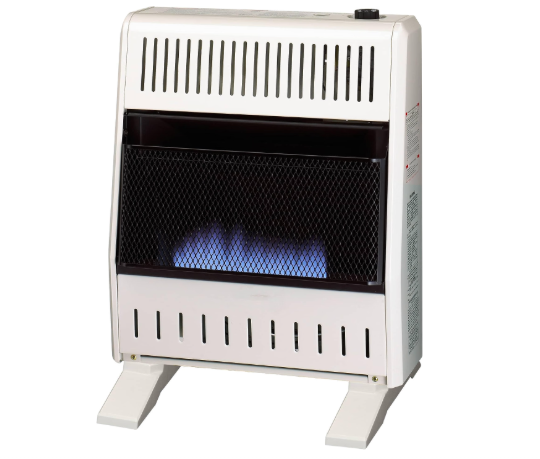
ProCom ML200TBA-B Blue Flame Heater
- Heats up to 950 sq ft
- Base feet and wall mount
- Built-in ODS shutoff
For Dual Fuel Setups
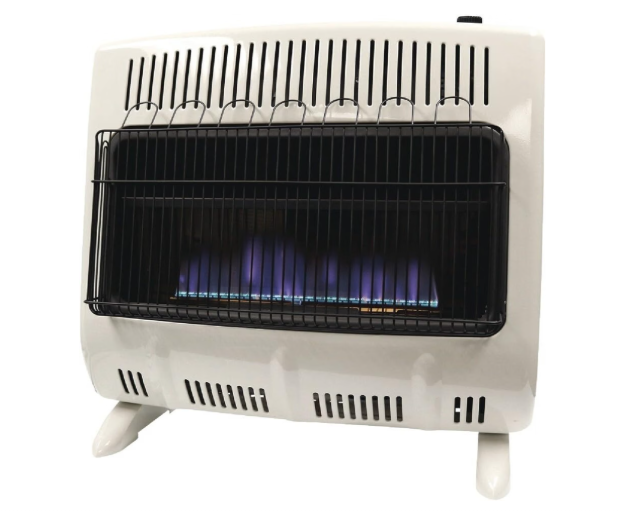
Mr. Heater Dual Fuel Blue Flame Heater
- Propane or natural gas
- Heats up to 1,000 sq ft
- Battery spark ignition
How We Picked the Blue Flame Heaters in This Guide
We focused on vent-free blue flame propane heaters built for indoor supplemental heat. Each one had to run without electricity, include a built-in oxygen depletion sensor, and offer clear heat control.
We compared listed BTU output and room coverage so the list spans mid-size and larger spaces. We also looked at ignition type, mounting options, and whether the heater offers a thermostat or only manual settings.
Finally, we weighed general owner feedback themes and flagged the limits you should know about, such as missing feet, remote compatibility, or installation needs.
1. ProCom ML200TBA-B Blue Flame Heater for Mid-Size Rooms
If you want one of the best blue flame propane heaters for a living area or cabin, this unit packs 20,000 BTU into a slim, modern cabinet rated for spaces up to 950 square feet.
A built-in thermostat with high, medium, and low control keeps the room steady once it warms up. You can hang it on the wall with the included hardware or stand it on the included base feet, and it needs no electricity, which makes it useful during outages.
Real-Use Fit: Owners commonly describe strong heat output and simple installation, though some note the first ignition can take a few attempts.
Key Highlights:
- Pilot oxygen depletion sensor that shuts the heater down if oxygen drops or carbon monoxide is detected
Practical Gains:
- Runs without electricity during outages
- Wall or floor placement options
- Slim profile saves room space
Fits Best With:
- Liquid propane supply systems
- Included wall mount or base feet
- Optional blower kits made for the line
Worth Checking: Vent-free units must follow local codes. Read the manual for propane supply, regulator, and installation requirements before you buy fittings or hire an installer.
2. Mr. Heater Dual Fuel Blue Flame Heater for Larger Spaces
Homes that use natural gas now but might rely on propane later, or the reverse, get flexibility here. This heater runs on either propane or natural gas, using dual valves, dual oxygen depletion sensors, and a manual fuel selector switch.
With 30,000 BTU and coverage up to 1,000 square feet, it suits larger rooms. A battery-operated spark ignition, with the battery included, starts it with a push, and the built-in thermostat cycles heat to hold your setting.
Real-Use Fit: Owner feedback generally points to strong performance, easy setup, and consistent temperature control for the price.
Key Highlights:
- Dual fuel system with a selector switch for propane or natural gas
- Clean-burning blue flame tube burner using natural convection
Practical Gains:
- One heater works with two fuel types
- No electricity needed to run
- Thermostat cycles on and off automatically
Fits Best With:
- Propane or natural gas supply lines
- Included wall mounting brackets
- Optional vent-free blower kits
Worth Checking: The listing says floor feet are not included. At 30,000 BTU it can overpower small rooms, so size it to your space and follow local codes.
3. Empire BF30 Blue Flame Heater With Hydraulic Thermostat
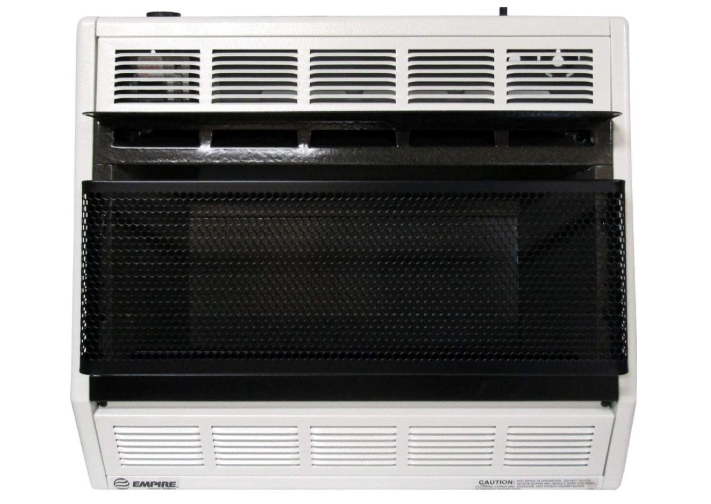
Steady, gradual heat is what this model is built around. Its hydraulic thermostat modulates output rather than simply switching on and off, which helps keep a large room at an even temperature.
The 30,000 BTU propane burner runs without any electricity on a standing pilot ignition, and the unit can hang on a wall or sit on the floor. An automatic shut-off and oxygen depletion sensor add a layer of safety.
Real-Use Fit: It suits owners who prefer simple rotary-knob control and want heat during power outages without batteries or plugs.
Key Highlights:
- Modulating hydraulic thermostat controlled by a rotary knob
- Automatic shut-off with oxygen depletion sensor
Practical Gains:
- Even heat without big temperature swings
- Works through power outages
- Flexible wall or floor placement
Fits Best With:
- Liquid propane supply
- Optional blower, sold separately
- Rooms with listed clearances available
Worth Checking: It cannot use a remote or wall thermostat. Keep at least 36 inches above, 5 inches on each side, and 2 inches from the floor, per the listing.
Why Blue Flame Heaters Make Sense for Indoor Spaces
Blue flame heaters warm the air in a room through convection. Heated air rises, cooler air is pulled into the heater, and the room warms evenly over time. That makes them a good match for insulated rooms where warm air can build up.
Going by the listed specifications, all three heaters in this guide run without electricity, which keeps them working during power outages.
Vent-free models also need no chimney or exterior vent, which keeps installation simpler than a vented heater. The trade-off is that combustion byproducts and moisture stay in the room, so sizing, ventilation, and local codes matter more.
A thermostat adds real comfort. Instead of turning the heater up and down by hand, it cycles or modulates the flame to hold your chosen temperature.
Sizing a Blue Flame Heater by BTU and Room Size
BTU output decides how much space a heater can warm. Manufacturers list a coverage area, but your real needs depend on insulation, ceiling height, and how cold it gets.
| Heater output | Typical listed coverage |
|---|---|
| 10,000 BTU | Small rooms, about 300 to 500 sq ft |
| 20,000 BTU | Mid-size areas, up to about 950 sq ft |
| 30,000 BTU | Large rooms, up to about 1,000 sq ft |
Bigger is not always better. An oversized vent-free heater in a small, tight room can make the space stuffy and add more moisture than you want. Many manuals include a sizing worksheet based on room volume, which is more accurate than square footage alone.
Features That Matter Most in a Blue Flame Propane Heater
- Thermostat type. Hydraulic and built-in thermostats hold a set temperature, while manual units need constant adjusting.
- Oxygen depletion sensor. An ODS shuts the heater off if oxygen in the room drops too low.
- Ignition. Push-button and battery spark ignition are simple, while standing pilot systems need no battery at all.
- Mounting options. Check whether wall brackets and floor feet are both included or sold separately.
- Fuel flexibility. Dual fuel models work with propane or natural gas.
- Blower compatibility. An optional blower can spread heat farther in larger rooms.
Propane Hookup Needs Before You Install a Heater
Many buyers are surprised by what it takes to connect a wall heater. Unlike a portable heater, most vent-free wall units connect to a fixed propane supply with the proper regulator, fittings, and shut-off valve.
Your heater’s manual lists the required inlet gas pressure, the type of regulator, and any minimum tank size. Some manuals also require installation by a qualified technician to keep the warranty valid. Read these details before buying, so the total cost does not catch you off guard.
A licensed gas installer can confirm your supply line, add a shut-off valve, and pressure-test the connections. That is the safest path for any permanent propane appliance.
Installation Tips for Wall and Floor Mounted Blue Flame Heaters
Pick a spot away from curtains, furniture, and anything that can burn, and keep the clearances your manual lists above, beside, and below the heater. These distances are part of safe operation, not a suggestion.
Wall mounting saves floor space and keeps the unit away from foot traffic. Floor mounting with base feet can be easier to reposition. Either way, keep children and pets from touching the hot front.

Place the heater where the thermostat sensor can read the room accurately, and avoid corners where heat gets trapped. If you plan to use a propane heater in a workshop or garage, check these guidelines on using a propane heater in a garage first.
Blue Flame or Radiant Heat for Your Room
Blue flame heaters warm the air, so the whole room slowly comes up to temperature. They work best in enclosed, insulated spaces.
Radiant, or infrared plaque, heaters warm people and objects directly, a bit like sitting in the sun. They feel warm faster up close and handle drafty areas better, but they heat the room less evenly.
If you want even, whole-room comfort, blue flame is usually the better match. If you sit in one spot in a drafty room, radiant heat may feel more effective. For a deeper look, see this breakdown of blue flame heater pros and cons.
Vent-Free Safety Rules Every Propane Heater Owner Should Follow
Vent-free heaters release combustion byproducts and moisture into the room, so safe use depends on following the rules. The U.S. Consumer Product Safety Commission advises choosing a heater certified to current safety standards and not using unvented gas heaters where local codes prohibit them.
- Install carbon monoxide alarms outside sleeping areas and test them regularly.
- Provide fresh air as the manual directs, especially in tight, well-sealed homes.
- Never block the ODS or burner with objects or dust.
- Follow altitude limits listed in the manual, since the ODS may not work correctly above them.
- Use only the fuel the heater is set up for.
Health officials stress that carbon monoxide has no smell or color. Learn the warning signs of CO poisoning, such as headache, dizziness, and nausea, and shut the heater off if anyone feels them. This guide on which propane heaters are safe indoors covers more.
Cleaning and Care for Steady Blue Flame Performance
Dust and lint near the burner and ODS can cause a yellow flame, odors, or nuisance shutdowns. With the heater off and fully cool, gently clean the burner area and pilot with a soft brush or low-pressure air, following the manual.
Check the flame each season. A steady blue flame is normal. Persistent yellow tips, soot, or a pilot that keeps going out are signs it needs cleaning or service.
Have a qualified technician inspect the heater and gas connections each year. This catches leaks, worn parts, and pilot problems before winter starts.
Common Mistakes When Buying a Blue Flame Propane Heater
- Choosing BTU by guesswork. An oversized heater can make a small room stuffy and humid.
- Ignoring local codes. Some areas restrict or ban vent-free heaters, especially in bedrooms.
- Skipping the hookup costs. Regulators, fittings, and professional installation can add up.
- Assuming feet are included. Some models ship with wall brackets only.
- Forgetting CO alarms. Every home with a combustion heater should have them.
- Using it as the only heat source. These heaters are built for supplemental heat, and codes often treat them that way.
Questions Owners Ask About Blue Flame Propane Heaters
Can I Use a Blue Flame Heater in a Bedroom?
Often not, or only under strict limits. Many codes allow an unvented heater in a bedroom only if it is a listed, wall-mounted unit of 10,000 BTU or less with an oxygen depletion sensor, and only where the local authority permits it. Larger models like 20,000 or 30,000 BTU units are generally not meant for sleeping rooms. Check your local code and the heater’s manual before placing one near where anyone sleeps, and learn how carbon monoxide from propane heaters builds up.
Do Vent-Free Blue Flame Heaters Add Moisture to the Air?
Yes. Burning propane produces water vapor, and a vent-free heater releases it into the room. In dry winter air, a little extra humidity can feel comfortable. In a tight, small space, too much moisture can cause condensation on windows and encourage mold. Sizing the heater properly, providing fresh air as directed, and running a bathroom or kitchen fan helps keep humidity in check.
Can I Run a Wall Heater From a 20 Pound Propane Tank?
It depends on the model and its manual. Some heaters list specific regulator and supply requirements, and a few call for larger tanks or a fixed supply line for steady pressure. Small tanks can also struggle to supply enough vapor in very cold weather. Always follow the installation section of your manual, and have a qualified technician set up any permanent connection.
Does Altitude Affect a Vent-Free Heater?
It can. The oxygen depletion sensor is calibrated for a certain range, and at higher elevations the thinner air can cause nuisance shutdowns or make the sensor less reliable. Most manuals list a maximum installation elevation. If you live in the mountains, check that number before buying, since some models are not approved for high-altitude use. A local propane dealer or installer can also tell you which heaters work reliably at your elevation.
Do I Need a Blower for My Blue Flame Heater?
Not always, but it helps in larger or oddly shaped rooms. Blue flame heaters rely on natural convection, so warm air tends to collect near the heater and ceiling at first. An optional blower made for your model pushes that heat farther into the room. Blowers usually need electricity, so the heater still works during an outage, just without the extra air movement.
Choosing Warmth That Fits Your Space
The right blue flame propane heater matches your room size, your fuel supply, and your local code. Thermostat control adds comfort, an oxygen depletion sensor adds safety, and the right hookup keeps everything running reliably.
Use a simple rule: size the heater to your room, confirm vent-free heaters are allowed where you will use it, and plan for professional installation and working CO alarms.
If you want one heater that covers the most situations, the Mr. Heater Dual Fuel Blue Flame Heater is the one we recommend for most homes. It runs on propane or natural gas, heats up to 1,000 square feet, and holds temperature with a built-in thermostat, all without electricity. Just keep in mind that it is sized for larger rooms and ships without floor feet.